LGBTQ Glossary: Terms & Definitions
LGBTQ Glossary: Terms & Definitions
A clear, accessible guide to LGBTQ identities, terminology, and language.
You can quickly leave this website by clicking the “X” in the top right or by pressing the Escape key twice.
To browse this site safely, be sure to regularly clear your browser history.
From the rainbow flag to newer designs, learn what each flag represents.
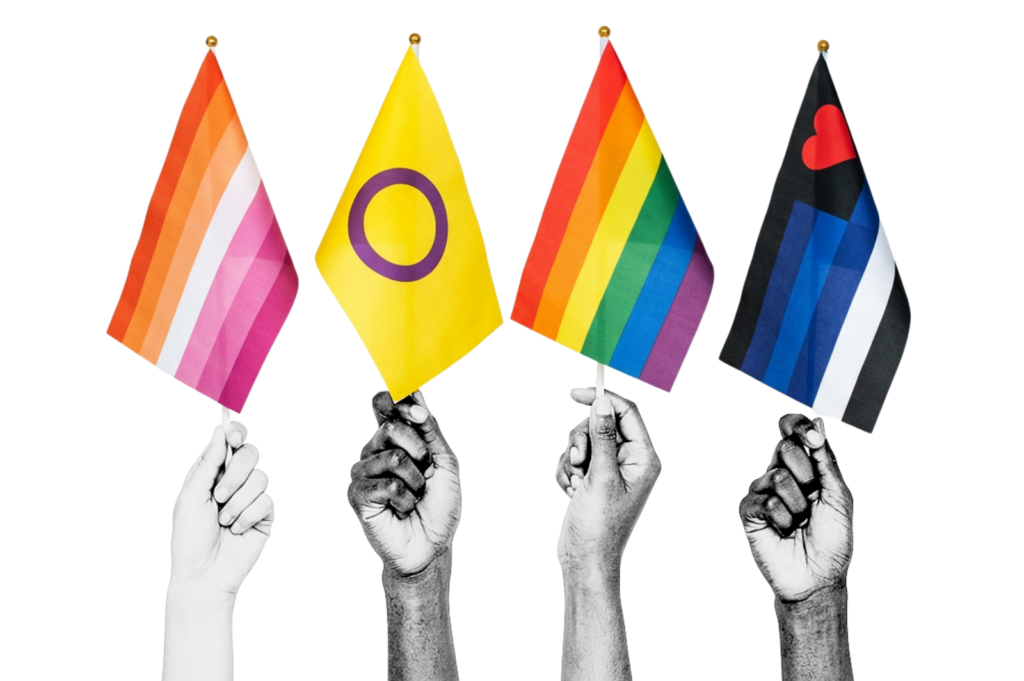
Pride flags are more than colorful designs—they’re symbols of identity, visibility, and community. Over time, different flags have emerged to represent the diversity of LGBTQ+ experiences, helping people express who they are and find belonging.
This page explains the most common pride flags, what each one means, and why they exist—using clear language and straightforward descriptions. Whether you’re seeing a flag for the first time or want to better understand one you already recognize, you’re in the right place.
There isn’t just one way to be LGBTQ+. As language, understanding, and visibility have evolved, so have the symbols people use to represent themselves.
Different pride flags exist to:
Each flag is a way of saying: this identity exists, and it matters.
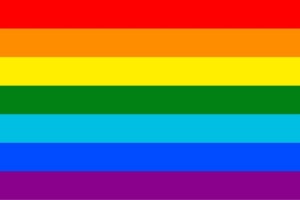
The original rainbow Pride flag was created for San Francisco’s 1978 Gay Freedom Day Parade, after Harvey Milk encouraged artist Gilbert Baker to design a new symbol of pride and liberation. The first version had eight stripes, with colors meant to represent values like life, healing, and spirit, and it was hand-dyed and sewn by volunteers.
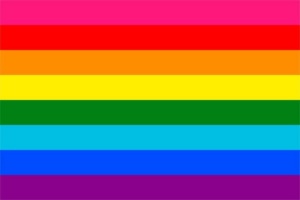
This refers to versions that intentionally honor Gilbert Baker’s original 1978 concept — especially the earliest eight-stripe design (including colors later dropped in mass production). It’s often used today to reconnect the rainbow flag to its San Francisco roots and its original “values-based” symbolism.
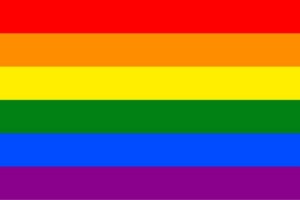
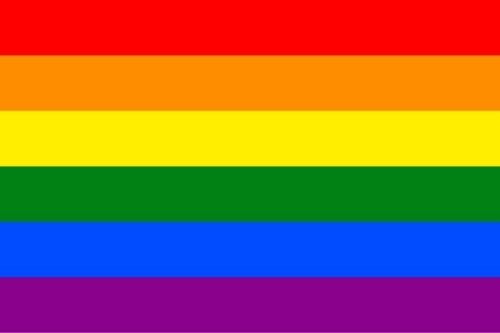
The most widely recognized Pride flag today. This six-stripe rainbow became standard as the flag spread and needed easier mass production, becoming broadly adopted by 1979. Over time it became the most common umbrella symbol for LGBTQ+ pride, visibility, and solidarity worldwide.
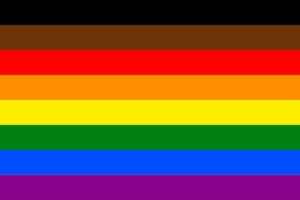
Philadelphia’s “More Color More Pride” flag launched in 2017, adding black and brown stripes to spotlight racial inclusion and uplift LGBTQ+ people of color. It was developed with Philadelphia’s Office of LGBT Affairs and partner creatives as a direct response to racism and exclusion within LGBTQ+ spaces.
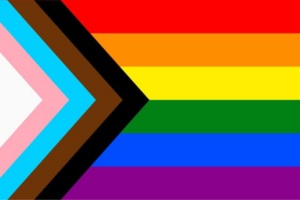
Graphic designer Daniel Quasar created the Progress Pride Flag in 2018, adding a chevron that includes the trans flag colors plus black and brown to emphasize inclusion and the need for continued progress. The forward-pointing chevron is intentional: it signals movement, while acknowledging some communities still face disproportionate harm.
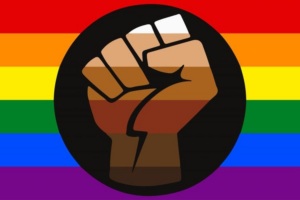
This flag emerged in 2020, incorporating a raised fist (echoing Black Lives Matter imagery) over a gradient of skin tones to center queer people of color and racial justice within LGBTQ+ movements. Reporting notes the designer isn’t definitively documented, but the flag’s purpose is widely described as linking LGBTQ+ pride with anti-racist solidarity.
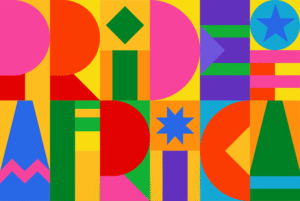
The Pride of Africa flag debuted at Johannesburg Pride in 2019, credited to the Pride of Africa Foundation, as a pan-African LGBTQ+ symbol. It was created to celebrate LGBTQ+ people of African descent while signaling safety, welcome, and belonging across African cultures and the diaspora.
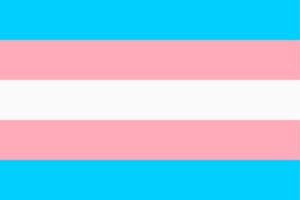
The transgender flag was designed in 1999 by activist Monica Helms and first flown at a Pride event in 2000. Helms designed it so the pattern looks “correct” no matter how it’s flown — a deliberate message that trans lives and identities are valid in every direction.
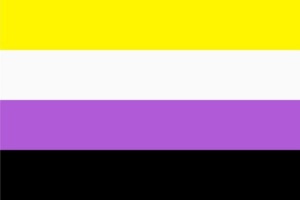
The nonbinary flag was created in February 2014 by Kye Rowan, as visibility for nonbinary identities grew and people wanted a symbol beyond the male/female binary. Rowan specifically framed it as something to be flown alongside the genderqueer flag — expanding representation rather than replacing it.
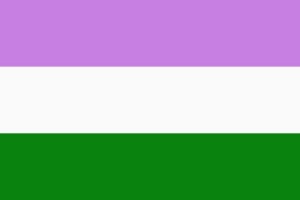
The genderqueer flag was designed by Marilyn Roxie, with the final version established in June 2011 (with a color update in 2012). Roxie developed it through multiple revisions with the goal of creating a clear, recognizable symbol for identities that challenge or exist outside conventional gender norms.
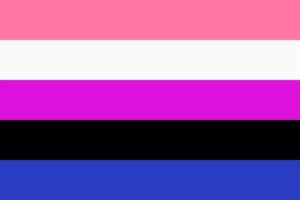
The most widely used genderfluid flag is credited to JJ Poole (2012), emerging from online LGBTQ+ community spaces as language and visibility for fluid gender experiences expanded. It became popular because it offered a distinct way to represent a gender identity that can shift over time.
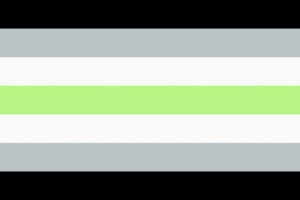
The agender flag is commonly credited to Salem X (2014) and spread through online community spaces as agender identity became more visible. It emerged in part because people wanted a distinct, recognizable symbol for experiences of having no gender, neutral gender, or minimal gender.
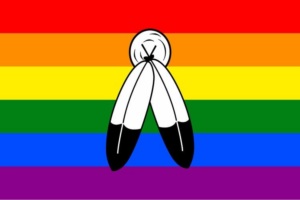
“Two-Spirit” is a modern umbrella term developed and adopted in 1990 at an intertribal Indigenous LGBTQ+ gathering in Winnipeg, created to better reflect Indigenous-specific understandings of gender and sexuality. There is no single universally “official” Two-Spirit flag — many designs exist, and communities often use symbols tied to their own Nations and traditions.
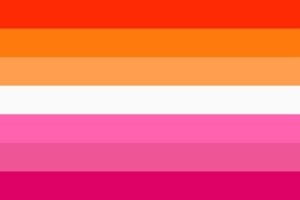
Lesbian flags have evolved through multiple designs, with no single version universally official. The widely used “sunset” orange-pink flag was created in 2018 by Emily Gwen and became popular as an inclusive alternative to earlier designs.
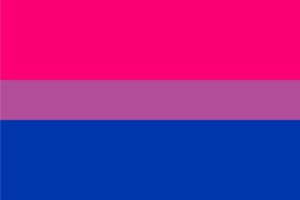
The bisexual flag was created in 1998 by activist Michael Page to increase bisexual visibility within society and within LGBTQ+ spaces. Page aimed to give the bisexual community a clear symbol comparable to the rainbow flag, at a time when bisexuality was often erased or dismissed.
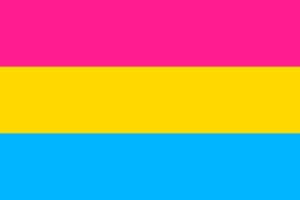
The pansexual flag began circulating widely online around 2010 as pansexual identity gained more visibility, especially in digital LGBTQ+ communities. The creator is not consistently documented, but it spread quickly because it offered a distinct symbol for attraction that isn’t limited by gender identity or expression.
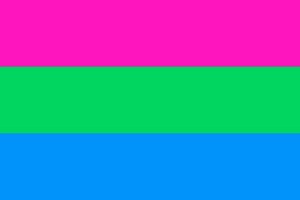
The polysexual flag was designed in 2012 by a Tumblr user known as Samlin, created to represent attraction to multiplegenders (but not necessarily all genders). It was intentionally styled to “sit alongside” other multisexual flags while giving polysexual people a distinct banner of their own.
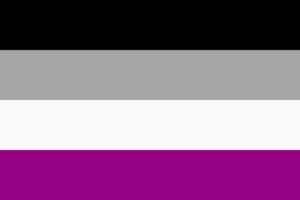
The asexual flag was chosen in 2010 through an online community process tied to AVEN (Asexual Visibility and Education Network), as the ace community worked toward a shared, unified symbol. It gained traction because it made asexual visibility concrete and recognizable at Pride events and beyond.
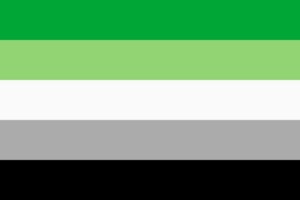
The aromantic flag was designed in 2014 by Cameron Whimsy, evolving from earlier versions into the five-stripe design most widely used today. It emerged as aromantic identity became more visible and people wanted a distinct symbol that affirmed aromantic experiences as their own (not simply a “variation” of something else).
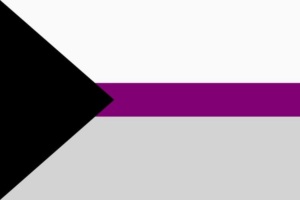
The demisexual flag emerged online in the early 2010s, influenced by the asexual flag and broader ace-spectrum visibility. Unlike some other flags, its exact creator and first publication are not consistently documented, but it spread because it offered a clear symbol for people who experience sexual attraction primarily after a strong emotional bond forms.
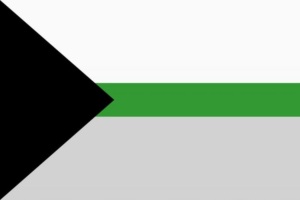
The demiromantic flag developed through online aromantic-spectrum communities as language for romantic orientations expanded. Its exact creator/date are not consistently documented, but it became widely used because it offers a distinct symbol for people who experience romantic attraction primarily after deep emotional connection.
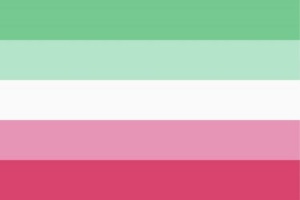
The abrosexual flag circulated online in the 2010s as abrosexuality — a fluid or changing sexual orientation — gained visibility. Sources differ on an exact origin story, but the shared through-line is that the flag emerged from community demand for a recognizable symbol that reflects orientation as something that can shift over time.
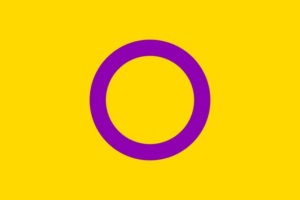
Represents people born with variations in sex characteristics. The intersex flag was created in 2013 by Morgan Carpenter (Intersex Human Rights Australia) to be non-derivative — not based on other pride flags or gendered symbolism. The yellow and purple were chosen to avoid traditional gender coding, and the unbroken circle represents wholeness, completeness, and bodily autonomy.
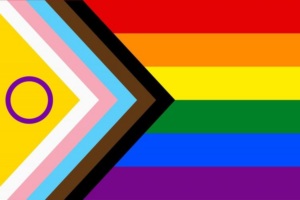
This version was introduced in 2021 by Valentino Vecchietti (Intersex Equality Rights UK / Global Inclusive Pride Flag Project), integrating the intersex circle into the Progress Pride chevron. The redesign was created to make intersex inclusion explicit — especially in conversations about bodily autonomy and non-consensual medical interventions.
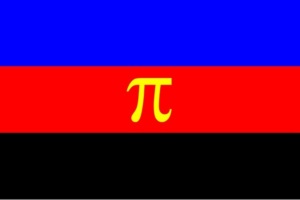
The original polyamory pride flag was created in 1995 by Jim Evans, inspired by how LGBTQ+ communities used flags to build visibility and connection. Over time, multiple redesigns have circulated (including a newer “tricolor” flag selected via a large community vote in 2022), but Evans’ 1995 design is widely cited as the historical starting point.
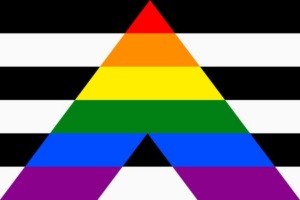
The straight ally flag emerged in the late 2000s as a way for non-LGBTQ+ allies to show visible support while keeping the focus on LGBTQ+ pride. Its exact origin is not definitively documented, but the design intentionally blends “straight” striping with rainbow symbolism to signal solidarity rather than centering heterosexual identity.
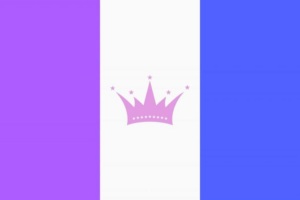
One of the earliest known drag pride flags was created in 1999 by artist Sean Campbell, sometimes called the “Feather Pride Flag.” It was developed to give drag performers a shared banner and to highlight drag as art, self-expression, community, and fundraiser culture.
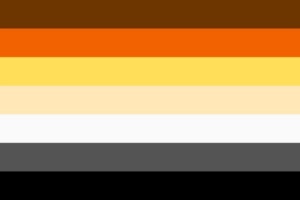
The bear pride flag (often called the International Bear Brotherhood Flag) was designed in 1995 by Craig Byrnes. It emerged from bear community spaces to celebrate camaraderie and body diversity — especially for bodies and masculinities often sidelined in mainstream gay culture.
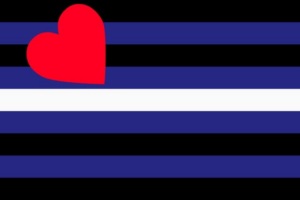
The leather pride flag was designed in 1989 by Tony DeBlase, created for the leather community’s visibility in Pride parades and public life. It spread as a unifying symbol across leather, BDSM, and fetish communities, emphasizing identity, community, and consent culture.
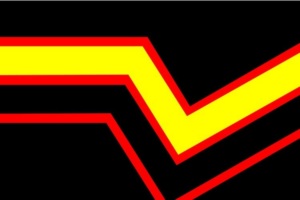
The rubber pride flag was designed in 1995 by Peter Tolos and Scott Moats as a visibility symbol for the rubber/latex subculture. It’s commonly seen during Pride because many LGBTQ+ people also identify with (or participate in) rubber community spaces.
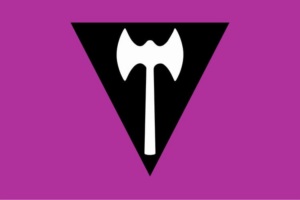
The Labrys lesbian flag was designed in 1999 by graphic designer Sean Campbell and published in 2000. Its imagery draws on reclaimed symbolism associated with lesbian feminist strength and resistance, including references to the labrys and the inverted black triangle.
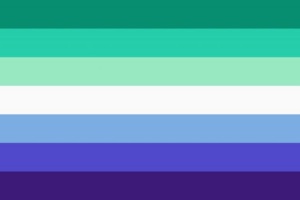
A widely used modern gay men’s flag was created in 2019 by Tumblr user @gayflagblog, intended to represent gay men as a distinct community while remaining inclusive of trans and gender-diverse gay men. It circulated widely online as people asked for a gay men’s flag that felt specific without excluding anyone.
For many people, seeing their flag for the first time is deeply emotional. It can mean:
Pride flags help create safer spaces—at schools, workplaces, homes, and events—by signaling inclusion and respect.
You may come across pride flags you don’t recognize yet. That doesn’t mean they’re “too many” or unnecessary. It usually means:
Learning what a flag means is often the first step toward understanding the person who flies it.
PFLAG San Francisco offers resources, education, and community support for LGBTQ+ people and their families.