LGBTQ Glossary: Terms & Definitions
LGBTQ Glossary: Terms & Definitions
A clear, accessible guide to LGBTQ identities, terminology, and language.
You can quickly leave this website by clicking the “X” in the top right or by pressing the Escape key twice.
To browse this site safely, be sure to regularly clear your browser history.
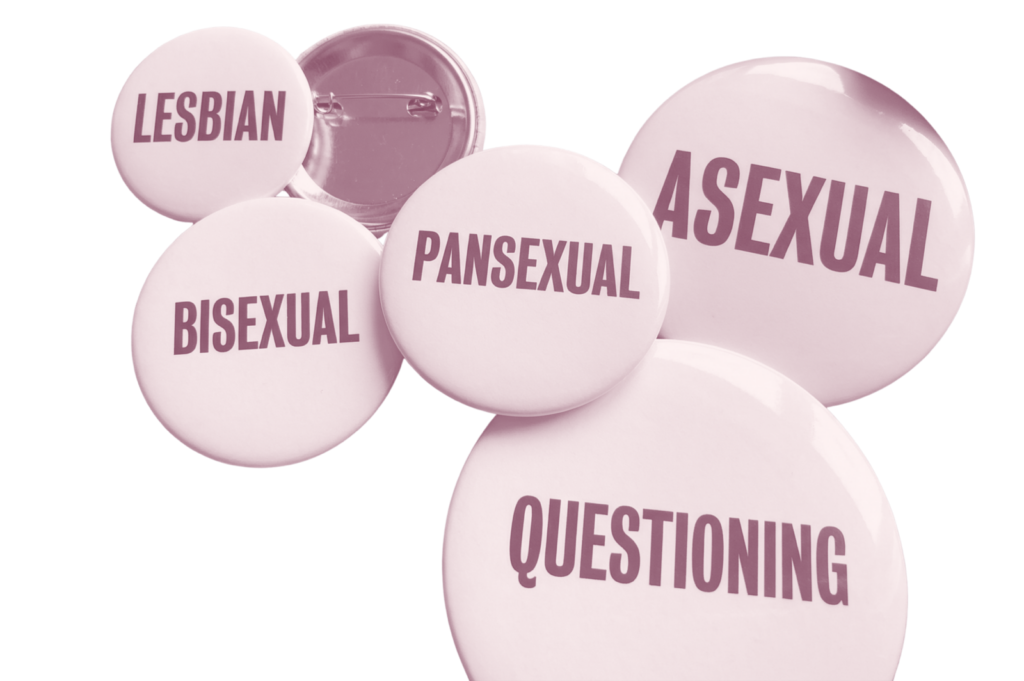
If your child has said they are gay, bisexual, pansexual, or something else you’re still learning about, you may have questions.
You may be wondering:
You don’t have to figure it out alone.
Sexual orientation describes who someone is emotionally, romantically, or physically attracted to.
It is separate from gender identity.
Understanding this distinction is often the first step for many parents.
A person who is attracted to people of the same gender.
Often used for men, but can apply more broadly.
A woman who is attracted to other women.
Bisexual means being attracted to more than one gender.
It does not necessarily mean “exactly two.” Many bisexual people experience attraction in ways that are fluid or expansive.
Pansexual means being attracted to people regardless of gender.
Some people describe it as attraction based on the person, not their gender identity.
Asexual people experience little or no sexual attraction.
Some asexual people experience romantic attraction, while others may identify as aromantic.
Questioning simply means someone is still exploring their sexual orientation.
Exploration is normal — especially during adolescence and young adulthood.
Some people distinguish between sexual attraction and romantic attraction.
For example:
Not everyone uses these distinctions — but for some people, they provide clarity.
This is one of the most searched questions online.
There is no single test.
Sexual orientation often becomes clearer over time through:
What matters most for parents is this:
You do not need certainty to offer support.
You can say:
“I trust you to understand yourself, and I’m here with you.”
That message has lasting impact.
Major medical and psychological organizations agree that sexual orientation is not a choice.
It is not caused by parenting, trauma, media, or peer influence.
Attempts to change a person’s sexual orientation have been shown to cause harm.
Supportive families, however, significantly improve mental health outcomes.
Across the country, LGBTQ+ people are facing renewed political attacks and misinformation.
False narratives often target sexual orientation education and visibility.
When parents understand the language, they are better prepared to:
Family acceptance remains one of the strongest protective factors for LGBTQ+ youth.
Here in the Bay Area, families are choosing education over fear.
You do not have to navigate this alone.
PFLAG San Francisco offers a confidential virtual support group for parents and caregivers every 2nd Tuesday of the month from 7–9pm.
Connect with other caregivers who are asking questions, sharing experiences, and learning how to show up for their children.
When you support PFLAG San Francisco, you help:
Your support ensures no family has to figure this out alone.